
Your projects, assembled by themselves.
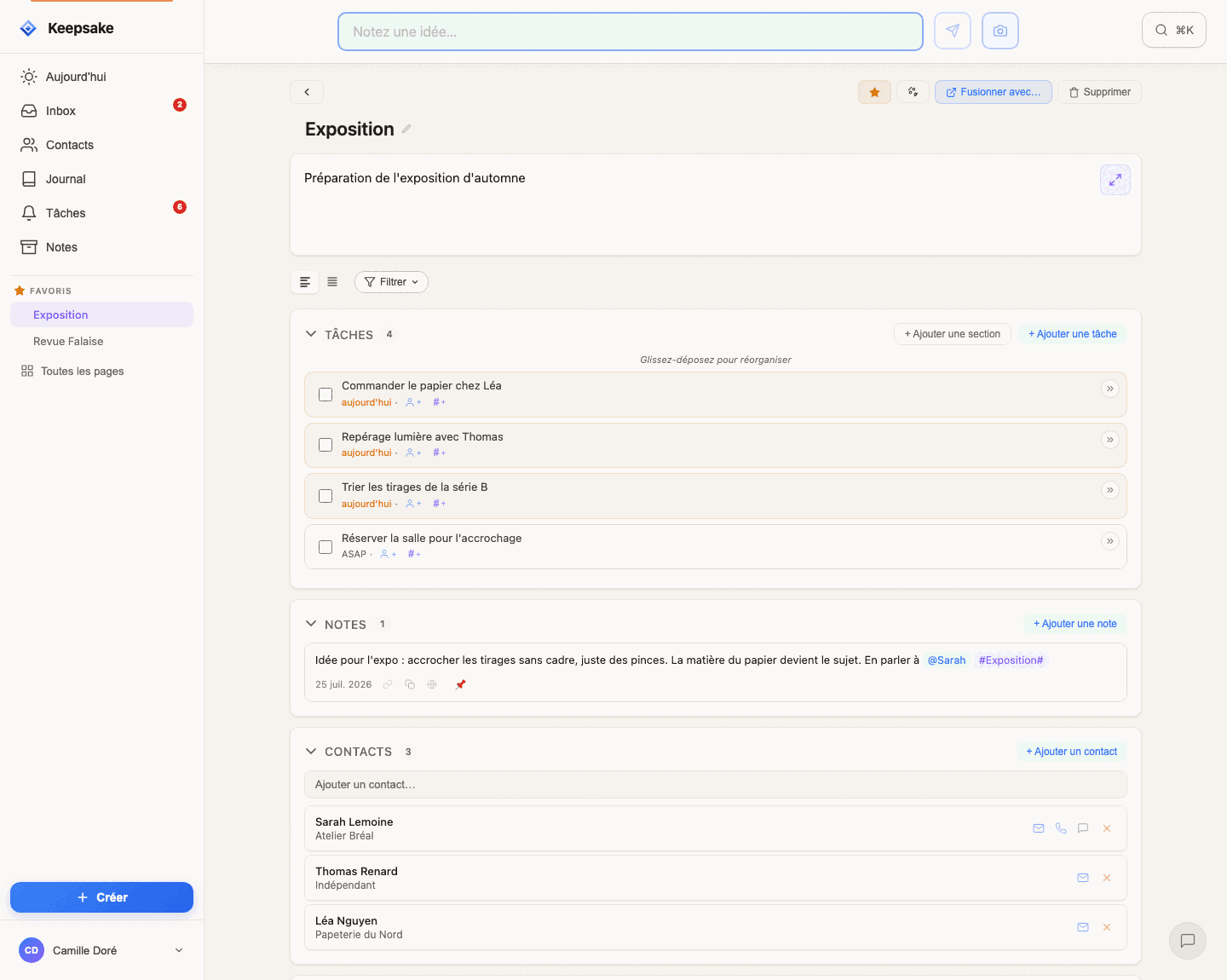
Type #a-project# or [[a page]] anywhere. Everything carrying that tag gathers on one page — notes, tasks, entries, the people involved.
The cost of filing things away
Choosing a folder before you write means deciding before you know
The same project lives in three tools and belongs to none of them
A note that matters to two projects has to go in one of them
By the time the structure is right, the project is over
No setup. Projects emerge from what you write.
A tag is just a keyword you type mid-sentence. If it doesn't exist yet, it's created on the spot. Every tag gets a page that works as a project hub — and that page fills itself as you work.
How it works
Type a tag
Mid-note, mid-task, mid-anything: #exhibition# or [[Falaise review]]. Keep writing — you never left the sentence.
The page appears
The tag is created on the spot and gets its own page. Nothing to configure, nothing to name twice.
Everything gathers
Every note, task, entry and contact carrying that tag shows up on the page. Add more from the page itself.
The project takes shape
Weeks later, the page holds the whole story: what you thought, what you did, and who was part of it.
What people put on a page
A client, end to end
Briefs, calls, deliverables and the people involved — one page instead of a folder tree.
A book, an exhibition, a launch
Long projects where ideas arrive months before the work does. The page remembers the ideas.
A recurring theme
Not every tag is a project. #reading#, #recipes#, #ideas# — a page can simply be a place things accumulate.
Tags versus folders
| Keepsake | Folders | |
|---|---|---|
| Setup before you start | None | Required |
| One item, several projects | ✓ | ✗ |
| Created while writing | ✓ | ✗ |
| Gathers people too | ✓ | ✗ |
| Add content from the project itself | ✓ | ✗ |
Go further
One click — you're in. No credit card. 30 days free.